
HOA Insurance, Built for Associations
The independent insurance agency focused on community associations: twelve markets compared side by side on coverage, deductibles and limits.
Association insurance
What an HOA or condo association master policy covers.
The master policy is the association's own insurance, funded through member assessments. It responds to the shared buildings and common elements, the association's liability, the funds it holds, and the decisions its board makes.
Where the master policy ends and a unit owner's HO-6 begins depends on the master-policy form, governing documents, applicable law and endorsements.
-
 Licensed in all 50 states and the District of Columbia
 -
 12 markets one program
 -
 Written rationale on every placement
The practice
An insurance agency built around community associations.
Community association insurance is our focus, so the coverage questions a board asks shape how we review, compare and document each placement.

Independent, not captive
Your association's risk decides where the coverage goes. You see what each market returned, including the ones that declined and the reason they gave.
Twelve markets, one submission
Your risk is presented to the markets that write it. The responses come back to you set side by side on coverage, deductibles and limits.
Board-facing by design
Boards have to explain insurance decisions to owners. Our documents are written to be read aloud in a meeting and filed with the minutes.
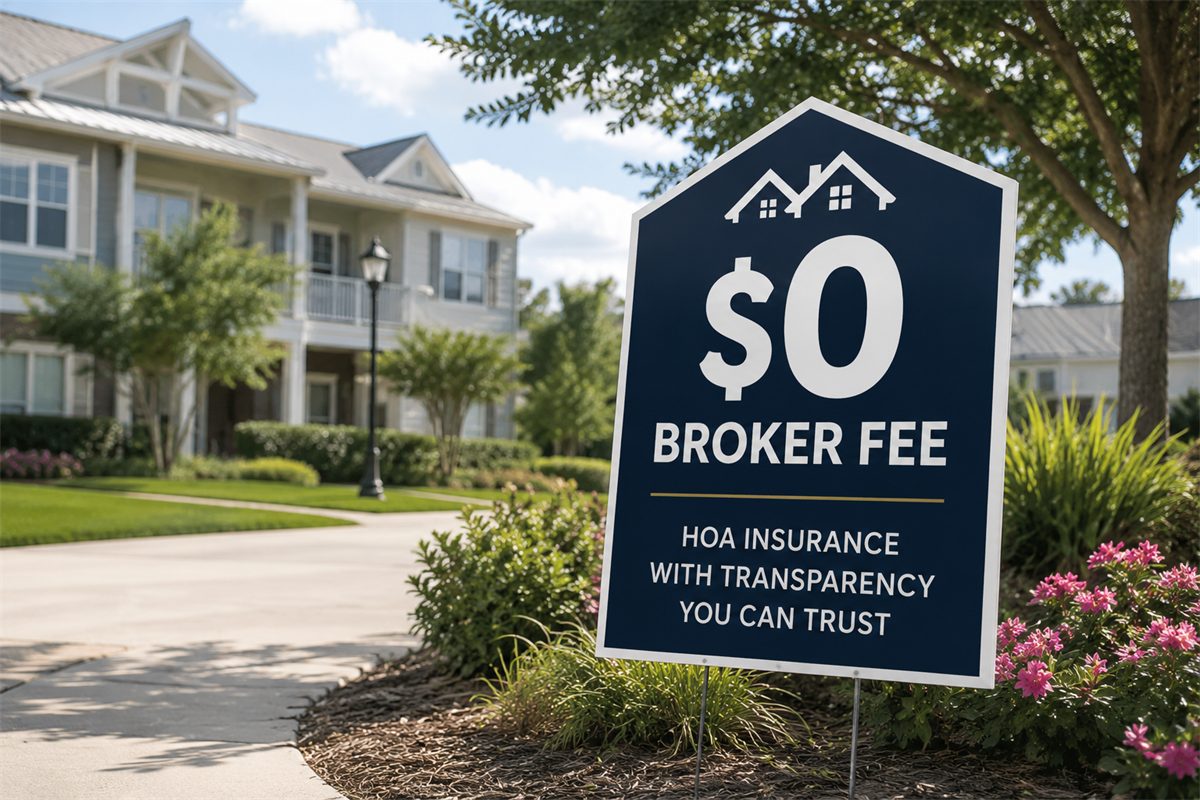
No broker fee
Reviewing the coverage your association already has costs nothing, and so does the market comparison that follows it. Nothing is placed until the board has seen the options and chosen one.
The Board Record
We place the coverage. Then we write down why.
A quote alone does not explain the decision. Every policy we arrange comes with a short written summary, meant to be filed with your meeting minutes.
Board members may face questions or claims about their decisions. The written summary records the information and reasoning used at renewal.

-
What we reviewed
The current policy, the loss history and the governing documents.
-
Which insurers we approached
Named, with what each one returned.
-
What each option cost
Premium, deductible and limits, side by side.
-
Why we recommended this one
Our reasoning, stated in plain language.
-
What is still not covered
Every gap has a name. We put it in writing rather than leaving it out of the proposal.
-
What to look at again next year
The items that will need attention before the next renewal.
Insurance your board can defend.
The process
Review. Compare. Place. Record.
Four stages, in order, on a schedule the board can hold us to.
- 01
Review
We read the current policies, the loss runs and the governing documents, and identify where the coverage and the bylaws disagree.
- 02
Compare
We approach our directly appointed markets that write your risk and set the responses beside one another on coverage, deductibles and limits.
- 03
Place
We bind the option the board selects and confirm the certificates, mortgagee clauses and lender evidence are correct.
- 04
Record
We issue The Board Record so the decision, and the reasoning behind it, is documented for the minutes.
Our markets
Markets a board will recognize
Direct appointments with twelve markets — national insurers alongside the specialists.












Carrier availability varies by state, association type and risk profile. Not every market is approached on every placement.
Compensation
No broker fee. Not now, not at renewal.
- No broker fee, no consulting fee, no fee to review what you already have
- Compensation disclosed in The Board Record on every placement
- What we are paid is disclosed for every option, so you can weigh the recommendation against it
What Coverage Does Your Association Need?
Enter your property address for a starting coverage checklist built on your state and unit count.
Who we serve
Who we work with
Four groups, each needing something different from the same placement.
Boards & trustees
Request a board review >Property managers
Talk to us about a portfolio >Developers & sponsors
Discuss a new project >Unit owners
Get HO-6 coverage >Coverage area
HOA Insurance by State
Licensed in all 50 states and the District of Columbia, with dedicated guides for 6 of them so far. Carrier availability varies by state, association type and risk profile.
Where we place coverage
Licensed in all 50 states and the District of Columbia. Select a state to open its page.
Questions
Frequently Asked Questions About HOA Insurance
What does an HOA master policy cover?
The association's master policy generally covers shared buildings, common elements, association liability and other association exposures. How far property coverage extends into each unit depends on whether the form is bare walls, single entity or all-in, together with the governing documents and endorsements.
What type of master policy does our association have?
The common structures are bare walls, single entity and all-in, and each allocates unit property differently. The policy, endorsements and governing documents determine which structure applies and who is responsible for particular property after a loss.
A pipe leaked into my unit. Does the association pay, or do I?
It depends on the master-policy form, governing documents, applicable law, deductible-allocation provisions, endorsements and the facts of the loss. The association deductible alone does not determine whether a cost may be allocated to a unit owner.
If the association has a master policy, does an owner still need an HO-6?
An HO-6 can cover belongings, personal liability, loss assessment and portions of the unit that the association's master policy does not cover. The appropriate coverage depends on the master-policy form and governing documents, and lender requirements vary by lender and loan type.